First, describe what happens
A door that will not close can behave in several ways: it may remain fully open, start down and reverse, stop at the same point, or respond to one control but not another. Those are useful distinctions. Repeatedly pressing the button without observing the pattern usually adds little information.
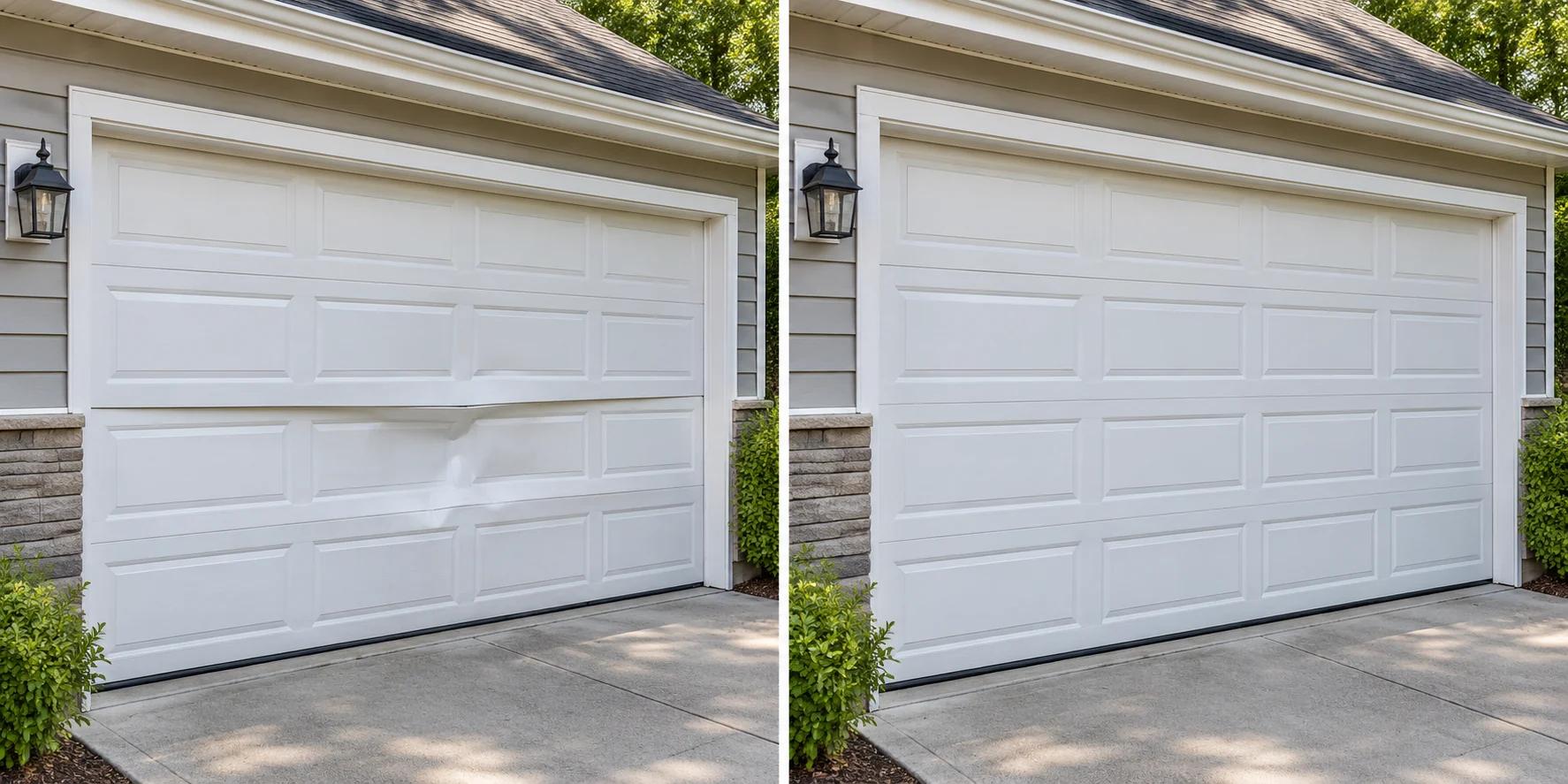
Begin with the door’s position and whether people or vehicles could enter its path. If the door is crooked, a cable is loose or a section is damaged, stop operating it and move everyone away. The next step is a professional inspection, even if the motor still makes a normal sound.
Keep the sensor path clear without bypassing it
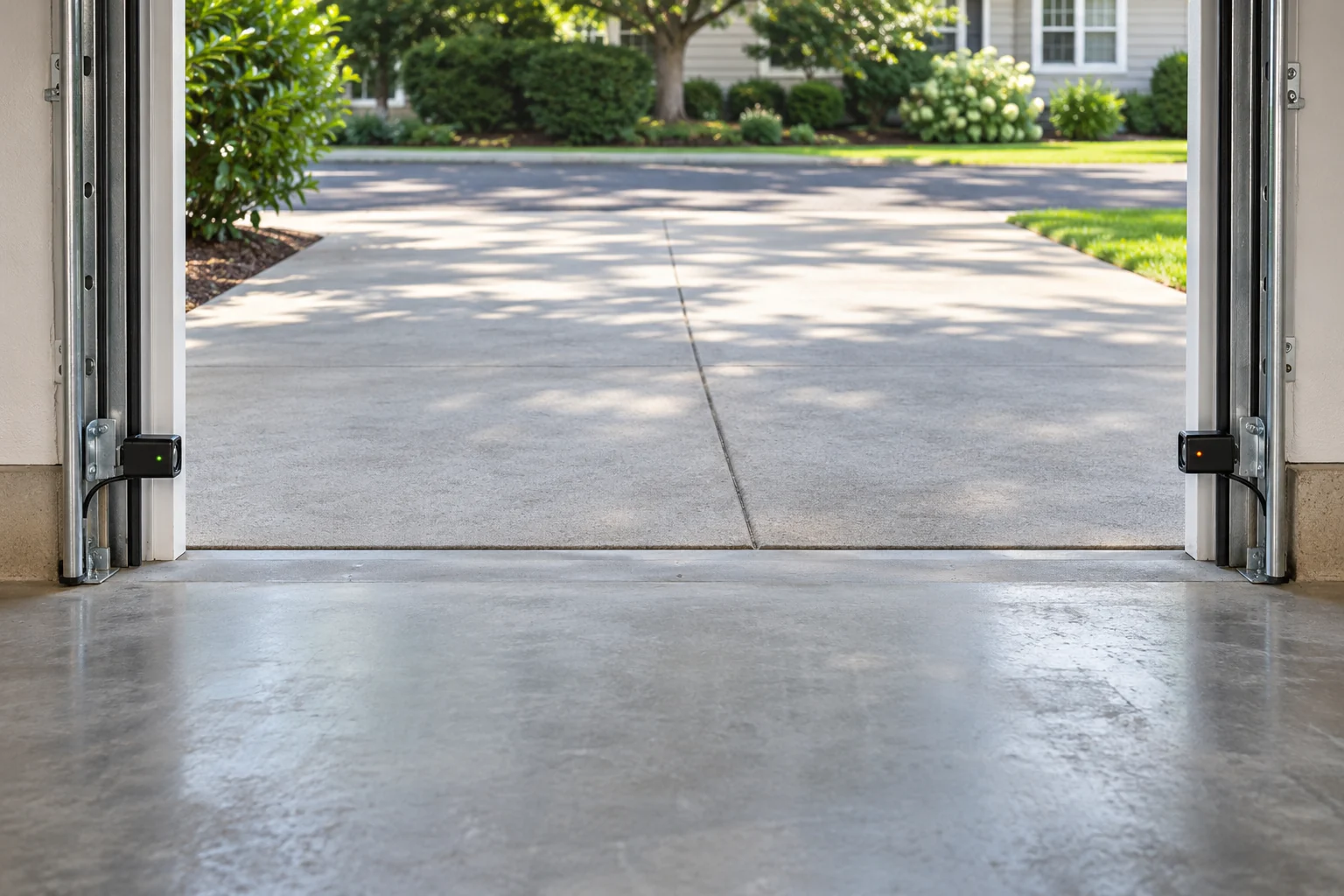
Photo-eye sensors help detect an obstruction near the opening. An object in their line of sight can prevent normal closing. From outside the travel path, look for a bin, tool, leaf buildup or another obvious obstruction. Do not reach under a moving door.
A clear path does not prove that the sensors, mounting or wiring are working correctly. Indicator lights and diagnostic patterns differ between models. Never tape sensors together, relocate them to defeat their purpose, or keep operating the door through an unresolved safety problem.
Read the pattern, not a generic flash count
Write down the exact behavior: where the door stopped, whether it reversed, which control was used and what the lights did. The correct owner’s manual can explain the model’s indicators. A flash sequence from one operator family should not be applied to a different model.
If you can safely read the make and model without a ladder or entering the opening, include that information when calling. The useful diagnosis considers controls, wiring, sensor alignment, operator settings and mechanical resistance together.
The motor and the door are different systems
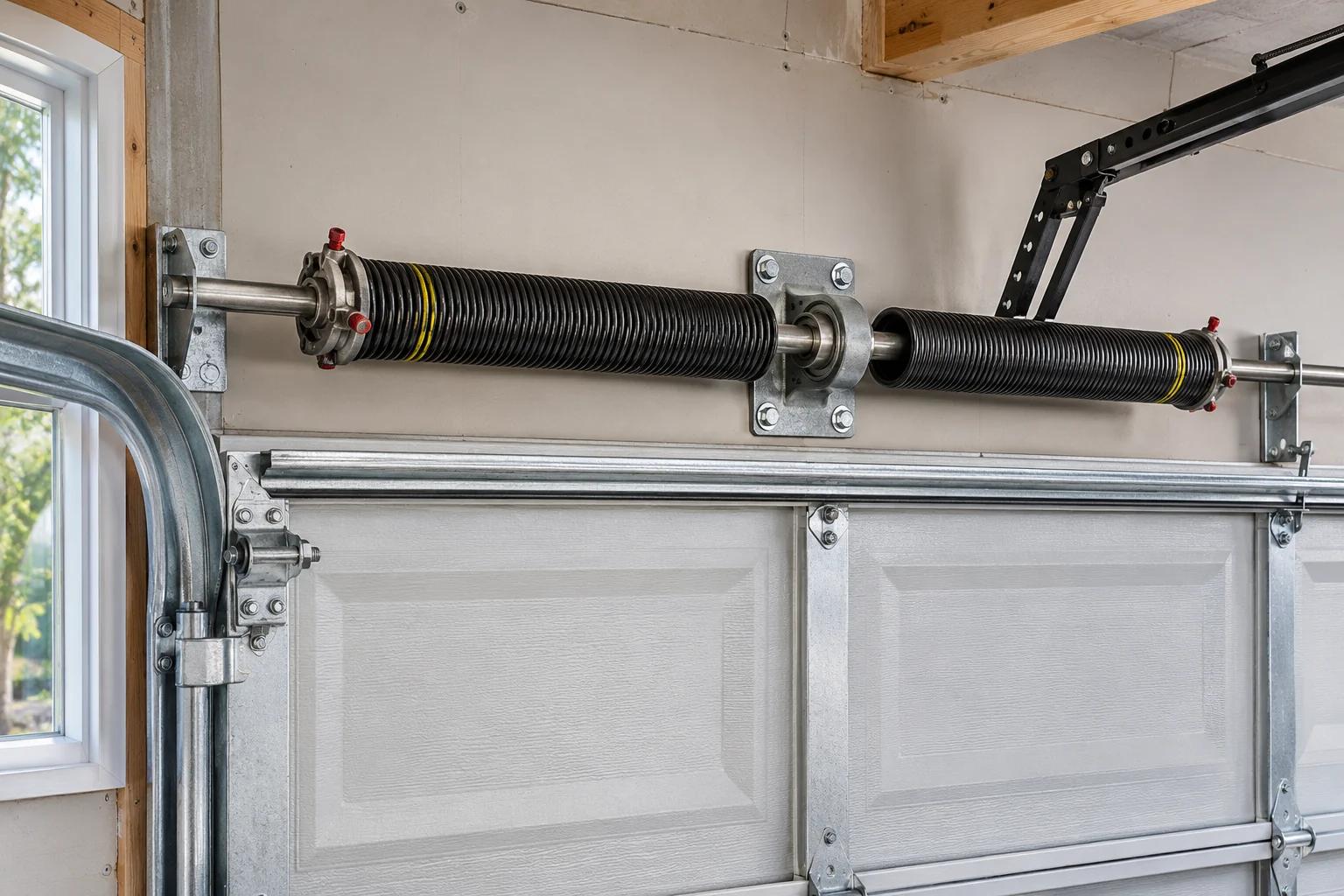
An operator can report resistance because the door binds, not because its motor is defective. Tracks, rollers, hinges, springs and lifting cables all affect how the door moves. Increasing force settings is not a suitable shortcut around an unidentified obstruction or mechanical fault.
A trained assessment can establish whether the issue belongs with opener repair, the lifting system or door maintenance. Describe the symptom rather than requesting a replacement part based only on a sound.
What to have ready when you call
Have your ZIP, the door’s position and the behavior you observed ready. Mention recent impacts, a power interruption, changes to controls or any previous work. Explain whether another entrance is available and whether a vehicle is inside.
Check the covered service ZIPs, including Elk Grove and West Sacramento, before arranging local scheduling. Leave the door alone if it cannot be operated safely. A call can establish the next step without asking you to dismantle or override anything.
Read the instructions for the installed model
For model-specific indicators, use Chamberlain Group’s official diagnostic-code guidance and the operator manual. For broader inspection principles, consult the DASMA consumer checklist. Use the instructions for the actual installed model.
If the issue includes a sudden heavy door or a loud bang, also read signs of a broken spring. A door that will not close is a symptom; safe next steps depend on the actual system and its condition.
Separate a time-of-day pattern from a permanent fault
A closing problem that appears only at a particular hour deserves a timing note. Direct light can interfere with some receiving safety sensors; a bumped bracket, dirty lens or wiring fault can produce similar behavior. Record which side receives light and whether the problem also occurs after the sun moves. Do not diagnose the fault solely from Sacramento’s sunny weather.
Chamberlain Group’s sunlight-interference guidance describes this issue for its equipment. An approved shield or revised sensor arrangement must retain the protective function and follow the actual model instructions. Covering a lens or changing sensor placement to defeat the beam is unsafe. A repeated fault needs the cause assessed rather than a workaround used each afternoon.
Build a record that distinguishes the next step
| What you observe | Why the distinction helps |
|---|---|
| Fully open and no closing response | Controls, safety circuit and power need separate checks. |
| Starts down, then reverses | Note the stopping point and any visible obstruction. |
| One remote fails but the wall control works | Identify the control rather than assuming a motor failure. |
| Tilts, scrapes or leaves a loose cable | Stop operation and describe the mechanical condition first. |
Do not run additional cycles just to complete this table if movement looks unsafe. Observations already made are enough to start the call. After a repair, ask which fault was found and how the protective features and full travel were checked. Keep the model-specific explanation, especially if the original problem was intermittent. A closing door alone does not establish that its safety protection has been restored.