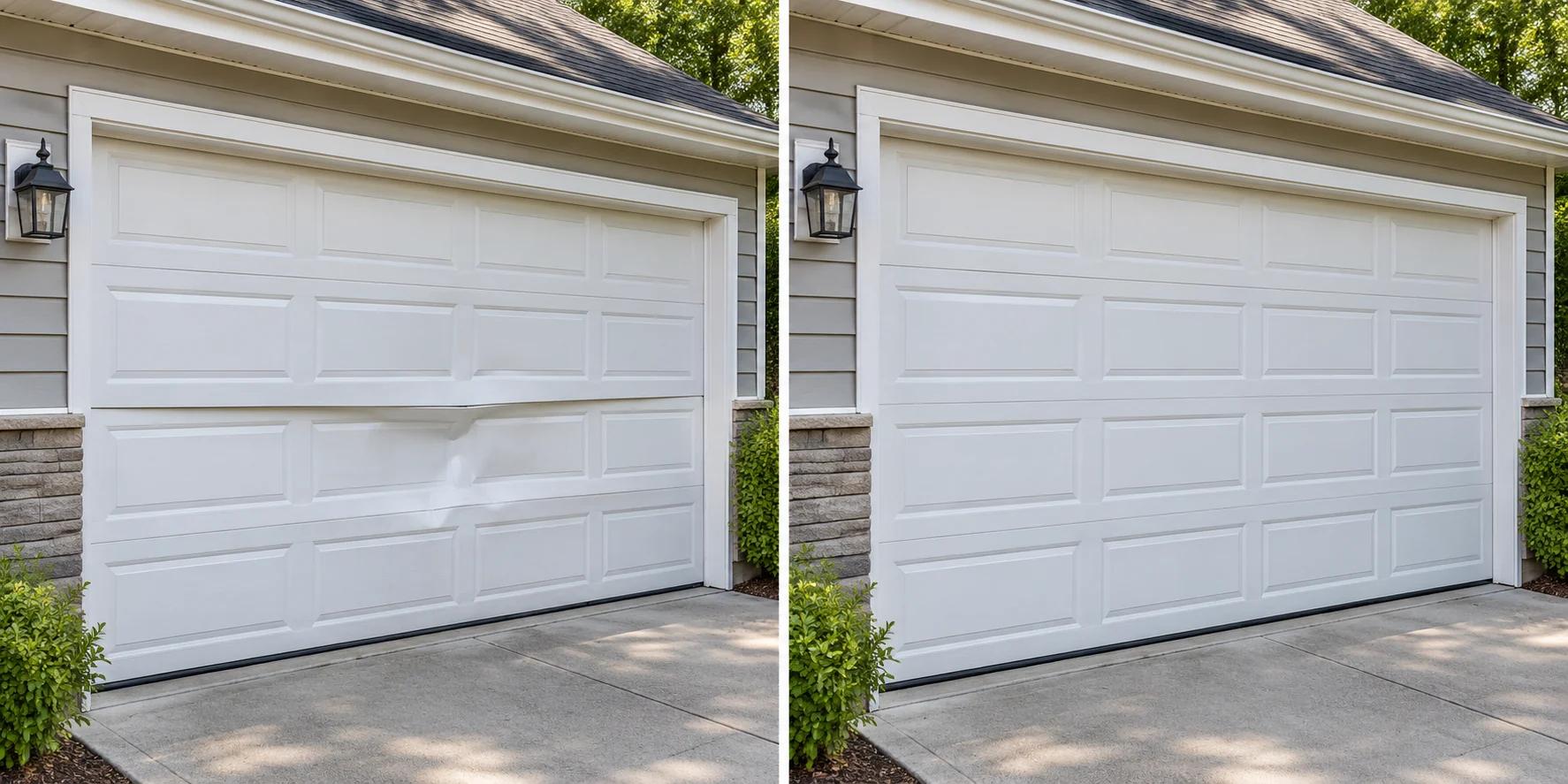
Why the door can suddenly feel different
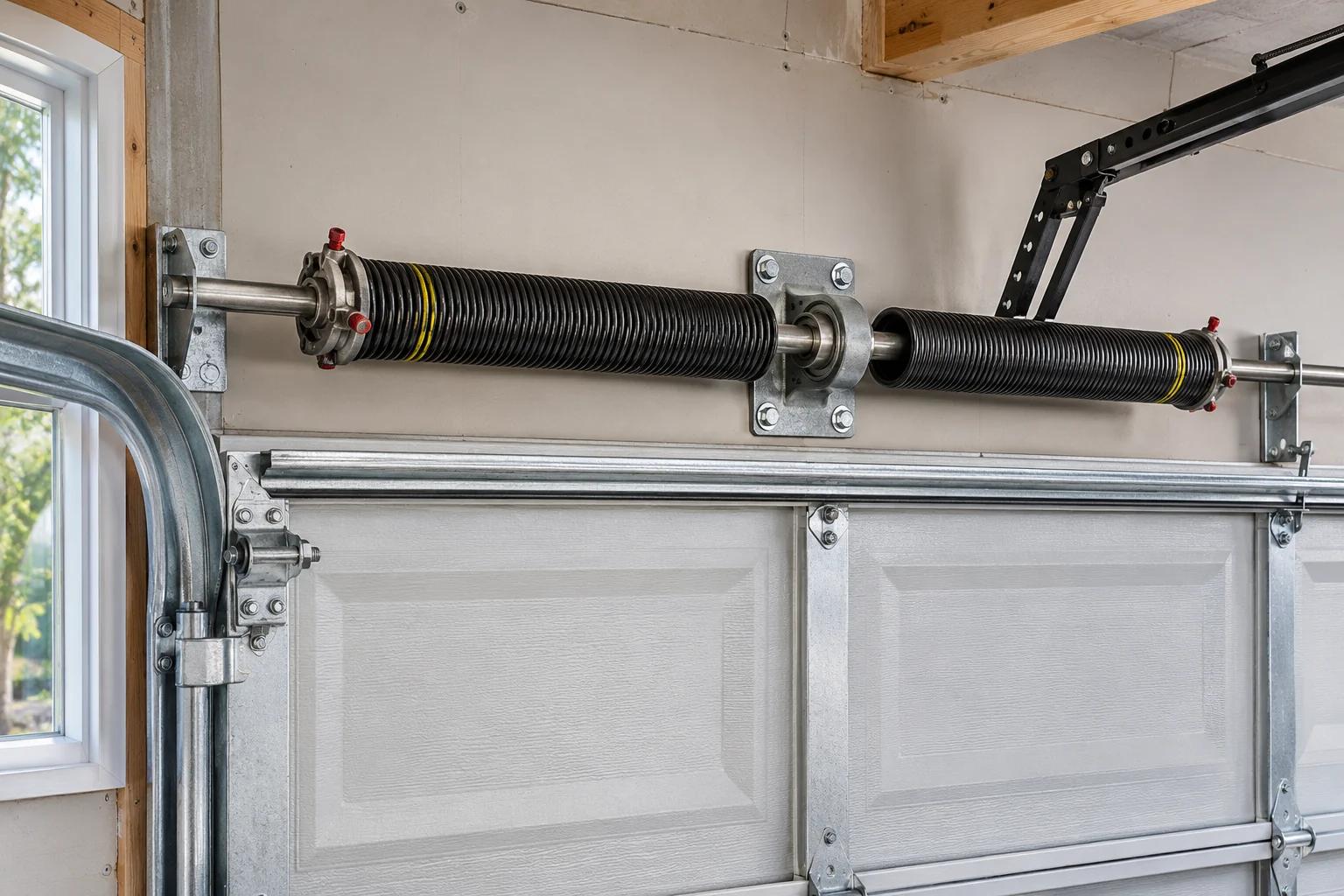
A garage door’s springs balance much of the door’s weight. The opener moves a system that should already be balanced. If that balance is lost, a familiar door may suddenly feel heavy, stop short or place an unusual load on the operator.
A loud noise can be a clue, but it is not a diagnosis by itself. Cables, tracks and other components can also affect movement. The practical first decision is whether the door should continue to operate, not which replacement spring to order.
Stop when the lifting system looks wrong
A crooked door, loose cable, visibly damaged hardware or suspected broken spring is a reason to stop using the door and keep the opening clear. Do not attempt to help the opener by lifting while it runs. Do not prop an unsupported door with a vehicle or improvised object.
Springs and connected hardware can store dangerous energy. Removing a bracket or handling a cable can change how the load is supported. Leave adjustment, removal and component selection to a trained door-systems technician.
Useful observations do not require touching the spring
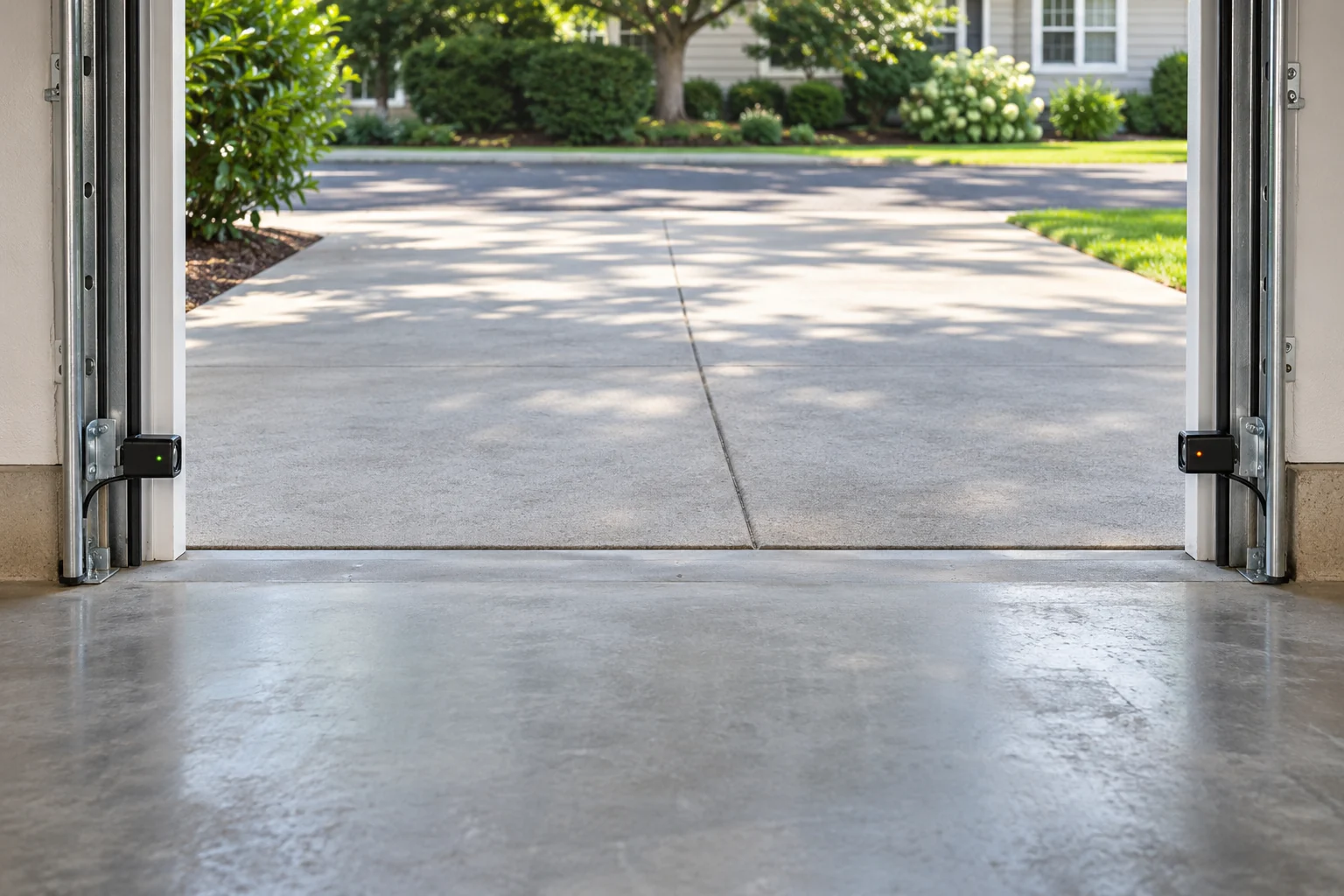
Tell the caller whether the door is open or closed, what happened just before the problem and whether there was a new sound. If the garage has another entrance, mention it. An equipment label visible from a safe standing position may help identify the assembly, but you should not climb or enter the travel path to read it.
You can explain what you have already observed during the call. Do not move the door, climb for a label or approach damaged hardware just to collect a better description. The current door position and the change you noticed are useful starting details.
What a spring inspection should account for
A suitable replacement depends on the door specification and installed hardware. Weight, dimensions and the counterbalance arrangement matter; a spring that looks close in a photograph is not enough. The technician may also review the cables, drums, bearings, hinges and mounting condition.
Ask what failed, why the proposed component matches the system and how door balance and movement will be checked afterward. The spring-repair service page explains the enquiry scope, while opener repair addresses a different part of the assembly.
Why a stronger opener is not the answer
A more powerful operator does not resolve an incorrectly balanced or damaged door. Treating every lifting complaint as a motor problem can leave the underlying fault unchanged. Discuss the system as a whole rather than asking the opener to overcome resistance.
If the overall door also has significant panel damage, compare the questions in the repair-or-replacement guide. The recommendation should follow inspection and compatibility, without a one-size-fits-all promise.
Planning a Sacramento Valley service call
Check the service-area ZIP list, including Orangevale and Roseville, and explain any access restrictions. Local scheduling is confirmed by phone. Keep household members, pets and vehicles away from the affected opening until the door’s condition has been assessed.
For background on inspecting residential door systems, use DASMA’s official safety guidance. It supports a clear boundary between visual homeowner observations and professional work on tensioned components.
Be particularly careful with a raised door and its release
The emergency-release cord disconnects the operator from the door on many systems. It does not take over the load carried by the springs. If a spring has failed, disconnecting a raised door can allow it to fall. Do not stand beneath the opening, pull the release as an experiment or ask someone to hold the door while you operate the control.
Tell the caller whether the door is fully closed, suspended partway or resting unevenly. Mention a vehicle beneath it and whether another entrance is available. Those facts help the receiving service assess access and the work needed to control the assembly. There is no need to move the damaged door to provide a more detailed description.
Ask what the complete lifting-system review found
| Item to discuss | Useful question |
|---|---|
| Door specification | How was the required counterbalance established? |
| Paired spring arrangement | Has the condition and suitability of the companion spring been considered? |
| Cables and drums | Is there wear, damage or uneven support beyond the failed spring? |
| Anchors and bearings | Are the support and shaft components sound? |
| Final operation | How were balance, controlled travel and operator safety checked? |
The answer should relate to your actual door, not a generic part selected by appearance. An older repair or later panel change may have altered the assembly. Record what was replaced and the model information after the work so future service starts with reliable details. Routine lubrication is a different conversation from a suspected spring failure; it should never be offered as a substitute for controlling an unstable door.