Backup power is part of the installation conversation
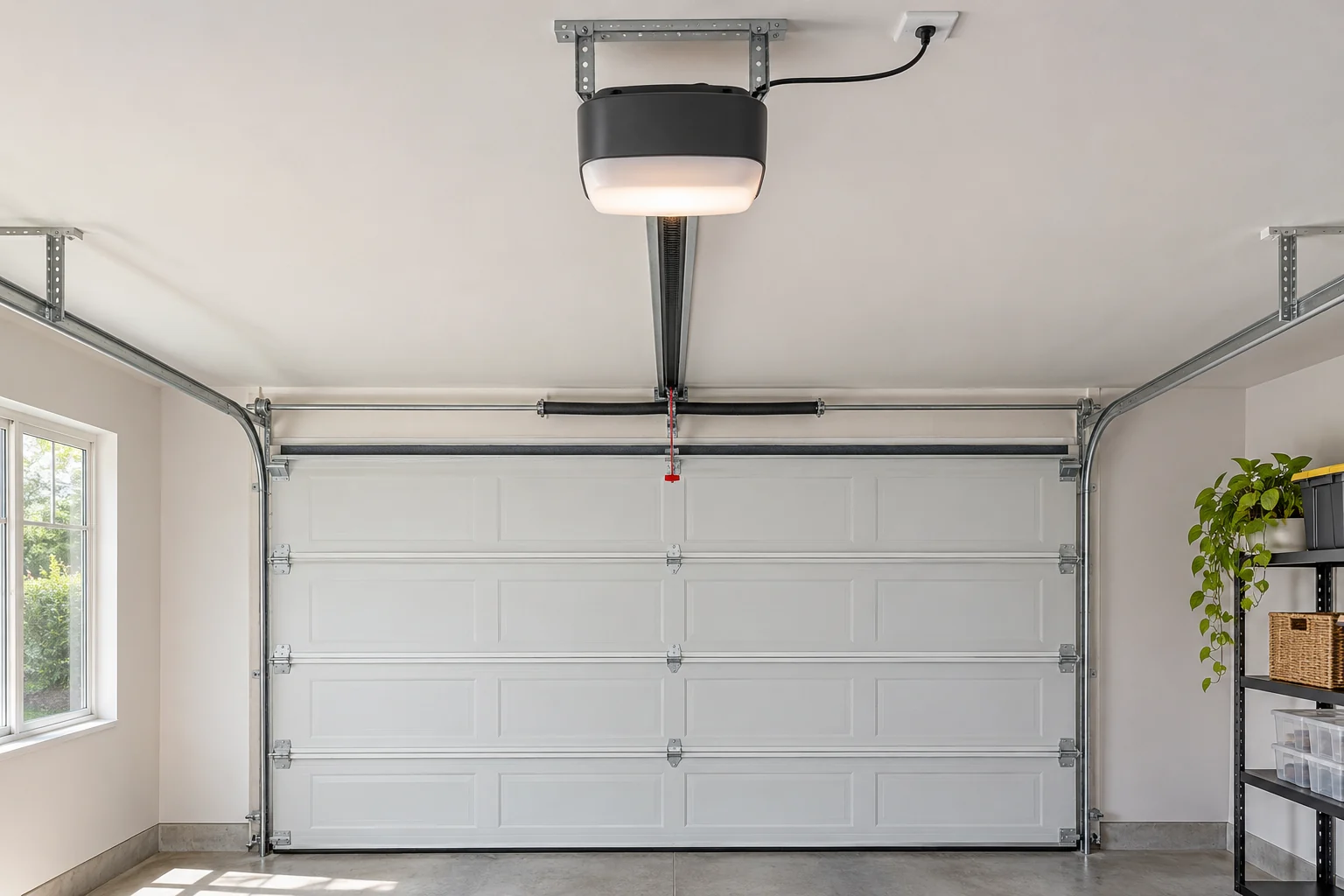
A residential garage door opener can lose its normal power supply even while the door itself is mechanically sound. A compatible backup function is intended to operate the automatic opener when an electrical outage activates it. The battery is one part of the operator system, not a fix for a broken spring or damaged door.
Discuss backup operation whenever a residential opener or replacement door is being planned. The California Department of Housing and Community Development bulletin explains the state’s battery-backup requirement introduced by SB 969.
A remote battery and an opener backup are different
The small battery in a handheld remote powers that control. The opener’s backup battery supports the operator during a qualifying power interruption. Replacing one does not substitute for the other, and neither makes unsafe lifting hardware suitable to operate.
Keep the operator make and model with the owner’s instructions. Those instructions establish compatible parts, status indicators, testing and replacement procedures. Avoid selecting a battery only because its case looks similar to an existing one.
Questions to ask before choosing an opener
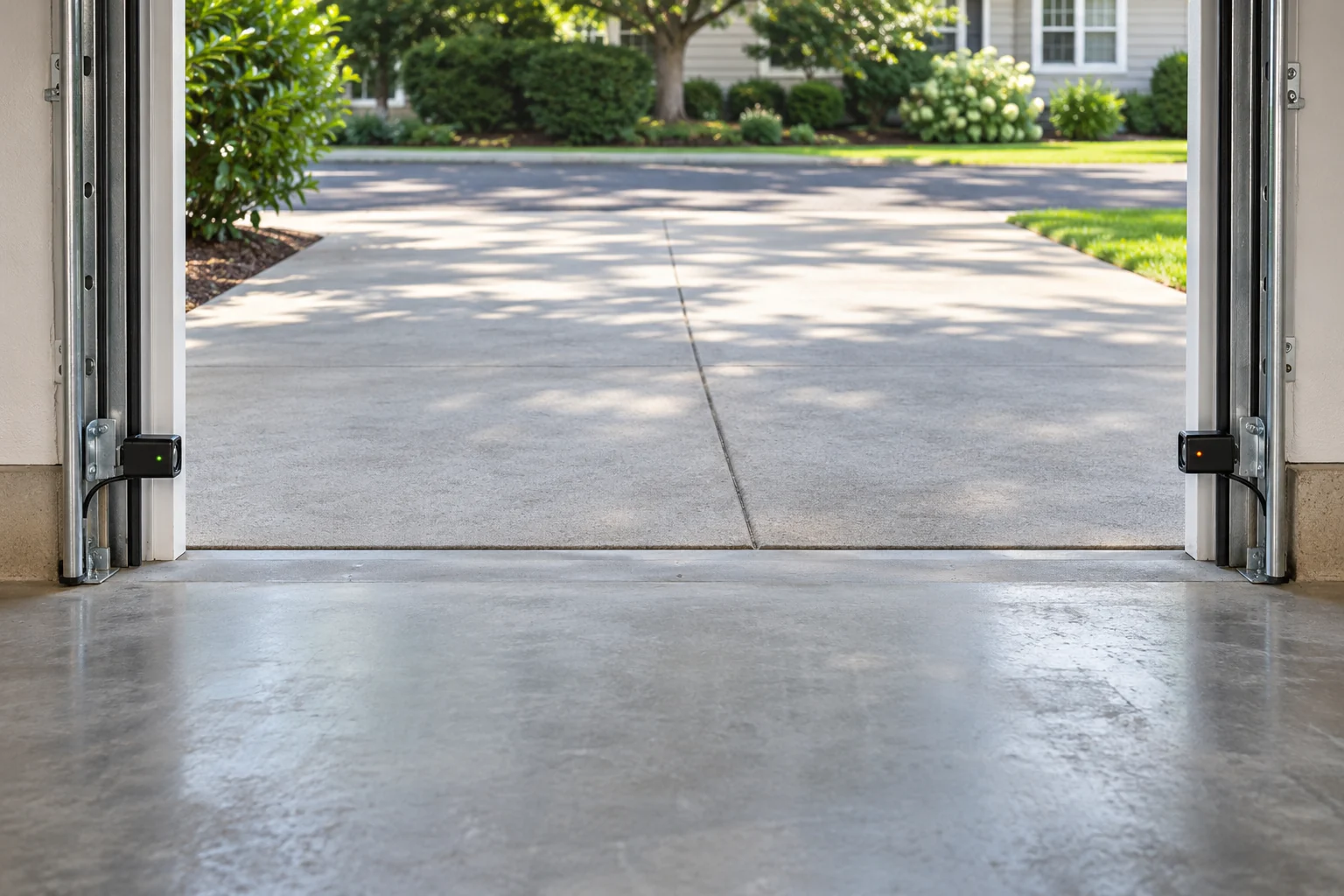
Ask how the proposed model meets the applicable California requirements and whether it fits the installed door. Discuss the mounting configuration, clearance, safety devices, accessories and backup function together. Household access needs may also affect which controls are useful.
If the door already binds, feels unusually heavy or travels unevenly, that condition needs attention first. A new opener should be matched to a properly functioning door. See opener installation and spring repair for the distinction.
Maintain the model’s backup function
Follow the manufacturer’s checks for the particular opener. Do not ignore a new indicator or assume an old battery still operates because the wall control works with normal power. Keep the correct manual available and ask what behavior should lead to a service call.
Backup capacity and supported features depend on the product and its condition. This guide does not promise a number of cycles or hours during an outage. Confirm model-specific information with the installer and official manufacturer instructions.
Plan access without taking risks
Know whether the garage has another entrance and which household members rely on the main door. If the door is damaged, do not treat an emergency release as permission to lift an unsupported assembly. Keep people out of the travel path and discuss safe access with a trained technician.
The DASMA safety page is useful background. For the installed operator’s battery function and indicators, consult its official manual rather than an unrelated video or a different model’s flash code.
Bring the details into the service call
Call with the property ZIP, the operator model if safely visible, and whether the enquiry is about a new installation, an existing battery indicator or a door that no longer moves correctly. These are different starting points. Local appointment availability and the appropriate inspection are confirmed by phone.
Check Folsom, Roseville and the complete covered ZIP list for address eligibility. For manufacturer context, review Chamberlain Group’s California SB 969 information. Requirements and a specific installation should be reviewed with the responsible qualified installer.
Distinguish an outage from a door or control problem
| Situation | Question to settle |
|---|---|
| Wall control works on normal power | Has backup function itself been checked using the model instructions? |
| Handheld remote fails | Is the issue limited to that control and its battery? |
| New backup indicator or audible alert | What does the exact operator manual say about that signal? |
| Door feels heavy or travels crookedly | Is a mechanical defect preventing safe operation regardless of power? |
This table separates enquiries; it is not a procedure for disconnecting power or testing damaged equipment. If the door is visibly unstable, keep it out of use and discuss that condition first. Backup power does not change the load carried by a spring or repair a displaced cable.
Plan ownership and upkeep after installation
Before the installer leaves, identify the backup equipment supplied with the operator and where the correct instructions are stored. Ask which indications show normal status and which require attention. Make sure the person responsible for the property knows who will respond to a battery warning, particularly in a rental or managed home.
Confirm compatible replacement parts from the model information rather than from battery size alone. The expected maintenance depends on the supplied product and its condition; there is no universal outage duration or guaranteed cycle count. If the garage is the household’s main entrance, discuss alternative access while the system is unavailable. Keep the manual somewhere reachable without first opening the garage. For a door-replacement project, include the existing operator’s compliance and compatibility in the written scope, even if its normal powered operation appears unchanged.